CASE STUDY
Designing for Two Sides of the Same Platform
PROJECT SCOPE
Onboarding flow built from scratch
My Specific Role
UX + UI Designer
Deliverable
Research backed wireframe foundation ready for handoff
THE PROBLEM
Flexygig came to us as a blank slate. No prior research, no design guidelines, no existing users to learn from. The real challenge wasn't just designing an onboarding flow; it was figuring out how to design for two very different people: a business owner vetting strangers for their workplace, and a gig worker betting on a platform they'd never heard of. Before a single screen could be designed, we needed to understand what each of them would need to feel comfortable moving forward. This case study documents how we built that research foundation and translated it into a wireframe the product team could build on, working within the brand's existing colors and logo while leaving visual stylization open for the next phase.
Constraints
Audience ranged from non-tech-savvy gig workers to business owners — one interface, two mental models
No detailed screen context from client — every decision had to be grounded in research, not direction
4-week sprint from blank slate to tested, handoff-ready wireframes
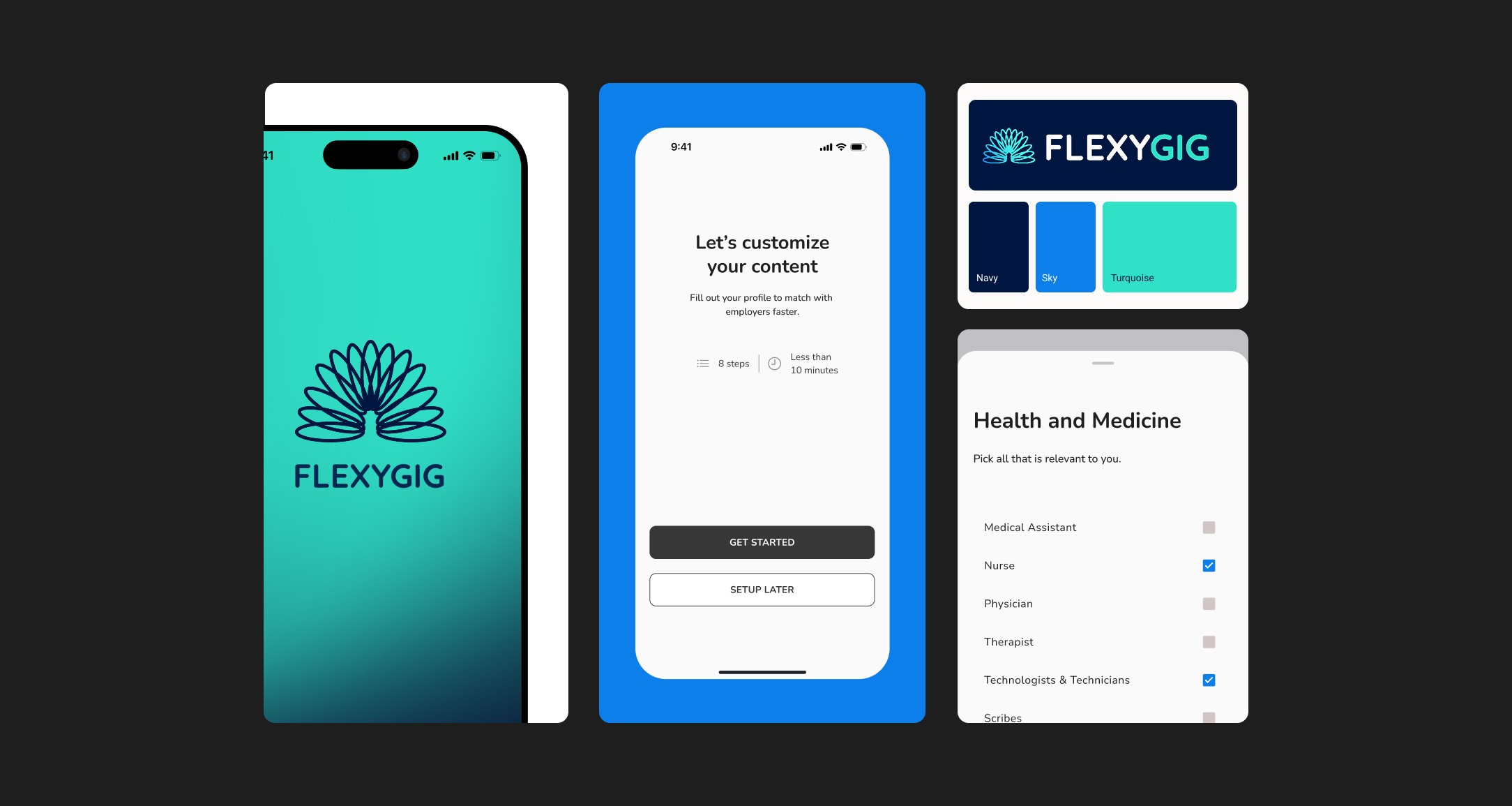
Working within existing brand colors and logo only — visual design left open for next phase
What the market told us
Our competitive analysis revealed that most platforms were focused on solving UI and flow problems. One observation that stood out was that none of them addressed data collection transparency during onboarding — something we kept in mind as we moved into designing Flexygig's own flow.

ANALYSIS 1
Mapping the Information Architecture Gap
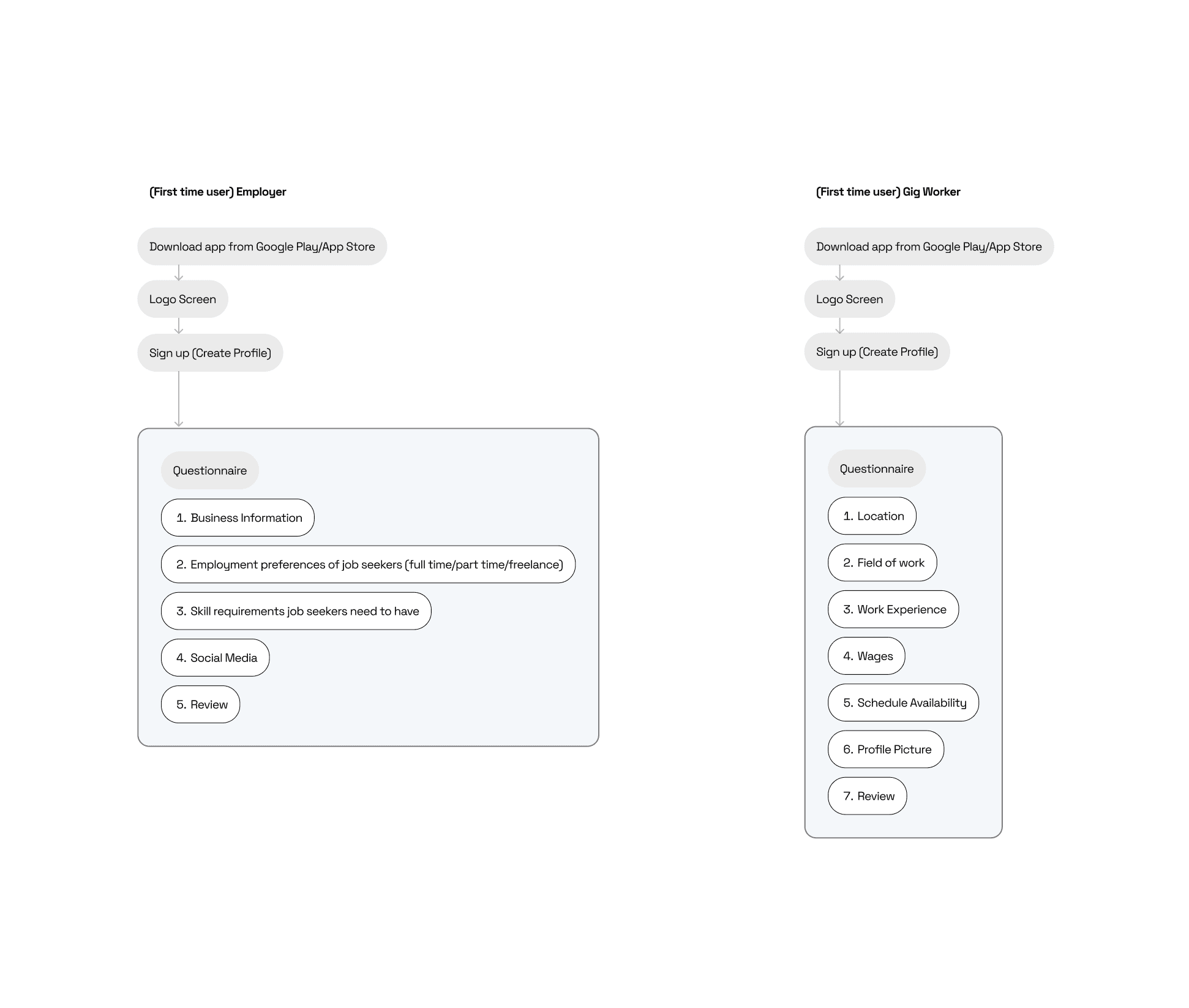
With no existing product direction to reference, we mapped competitor onboarding flows to identify what information a gig work platform typically collects and in what order. This gave us a structural foundation to build Flexygig's flow from scratch rather than guessing at what both employers and gig workers would need to provide to get started.
ANALYSIS 2
Grounding UI Decisions in Established Convention
Without existing design guidelines, we cross-referenced competitor UI patterns with established design systems like Google Material to ensure our component decisions were grounded in convention rather than assumption. This meant that button placement, form structure, and interaction patterns would feel intuitive to users from day one.
Understanding the users
What are the key factors when applying for and securing a job?
Through secondary research on temporary work patterns, we identified the core concerns that shape how gig workers evaluate platforms before committing to them. Studies show temporary workers are disproportionately exposed to lower pay, limited career development, and job insecurity, which means trust is not just a nice-to-have for this audience — it is the deciding factor in whether they engage with a platform at all. This grounded our focus on four key themes: data security, genuine postings, schedule flexibility, and financial stability.
First Design Iterations
How do we choose which design direction to present to our users?
Each of us created our own interpretation of the best way to present the user interface, but the challenge was determining which design was most user-friendly. We addressed this by leaning on user feedback to guide us.
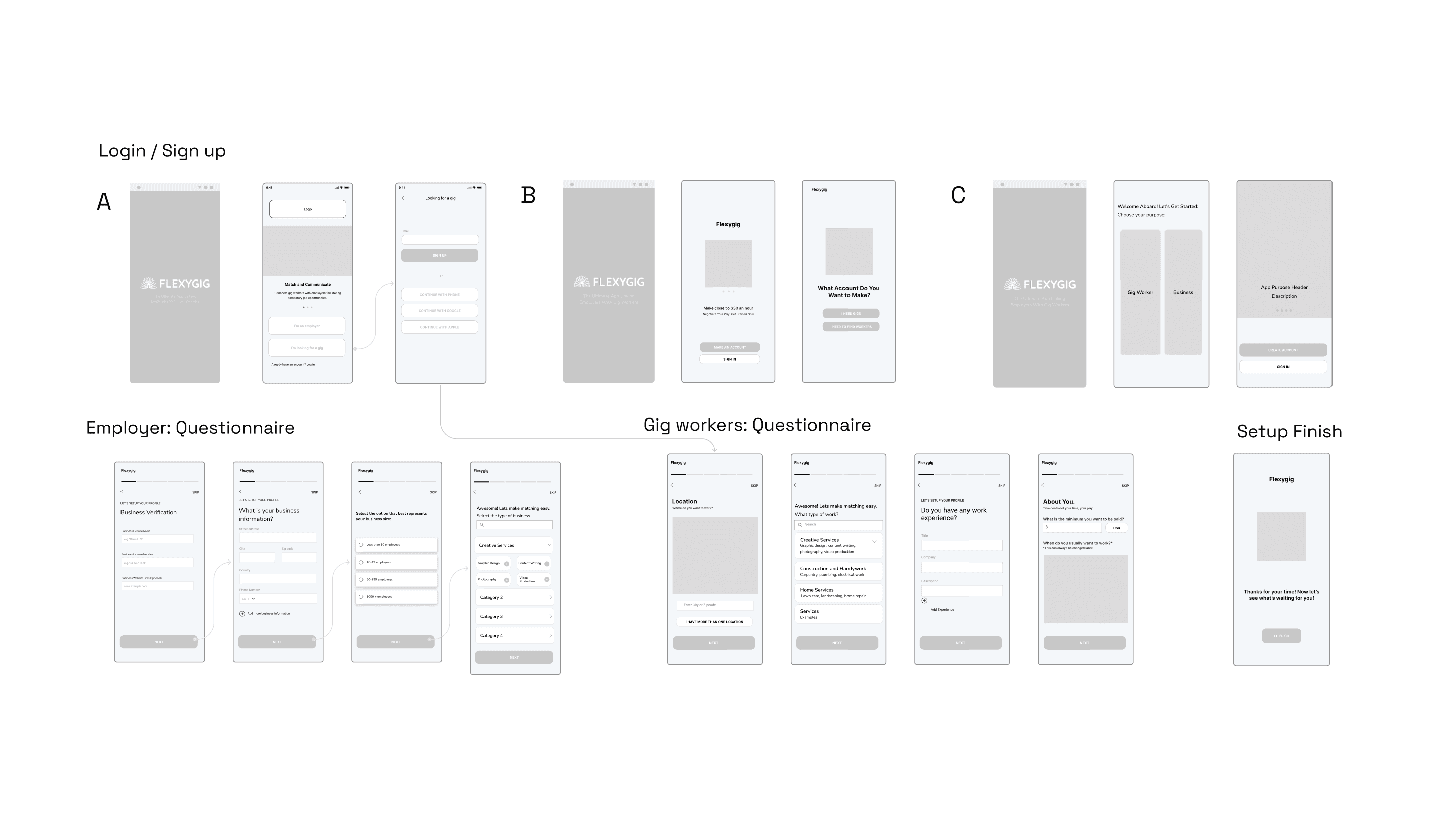
Why We Chose Design Option C (with a mix of A)
Through A/B testing, we discovered that button placement and size directly influenced user decisions. And as we continued building out the questionnaire, we realized the list of work types was far longer than expected—making dropdown menus a necessary shift to keep the experience clean and usable.
Improvements from User Feedback
Design Solutions
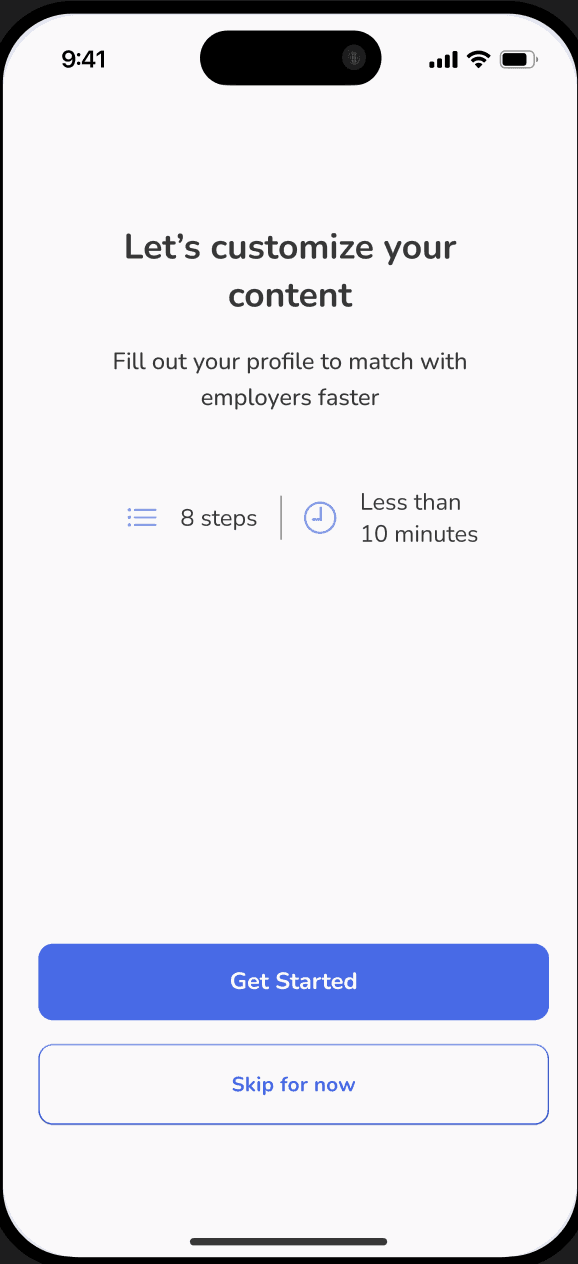
Introductory questionnaire screen explains why it’s important to fill out which is often skipped.

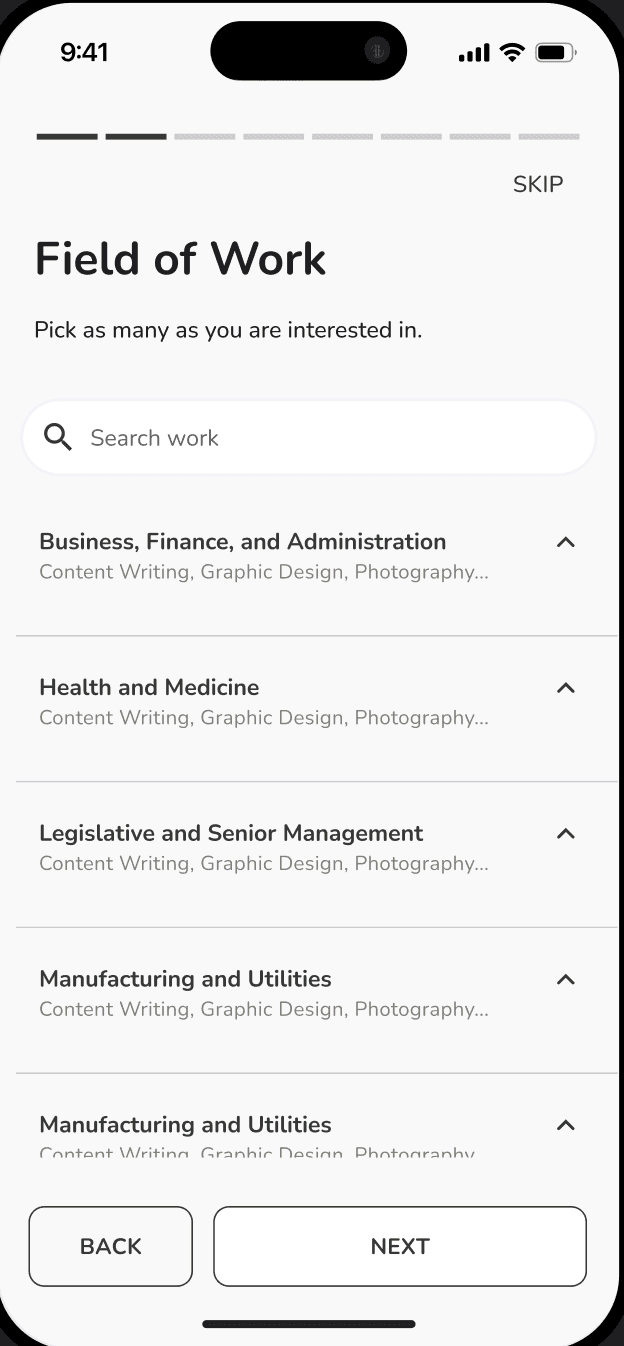
Categories are first broad, then refined to relevant jobs and skills, reducing cognitive load.
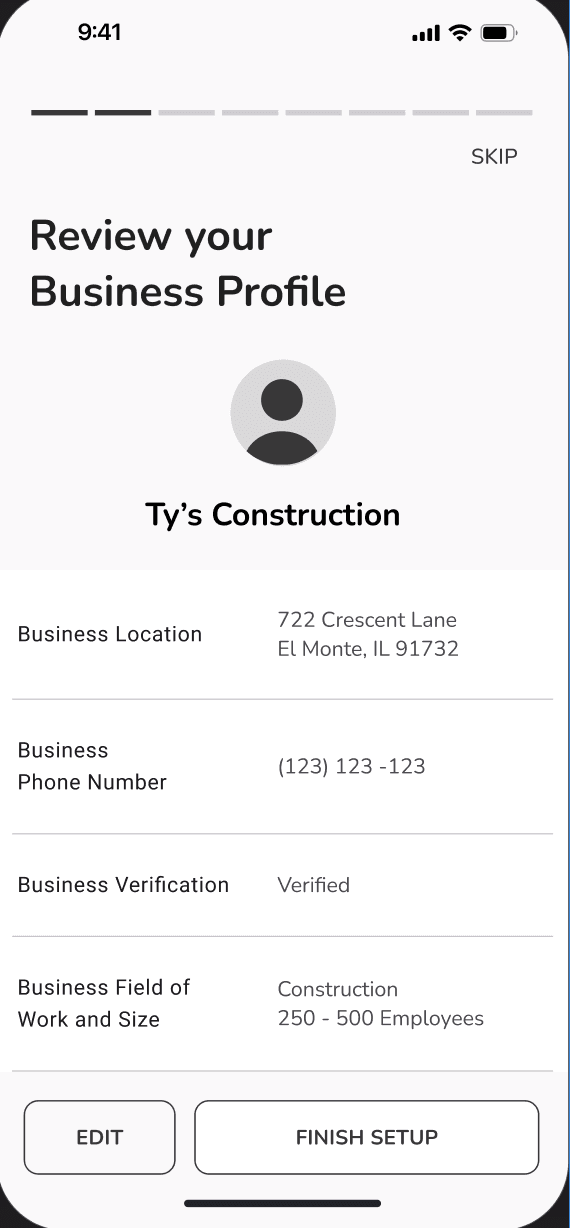
Builds trust by confirming job legitimacy and gives workers a quick profile check for accuracy.